Featured
Post-Bankruptcy Help Including Follow-Up Services Fundame...
The Buzz on Recent Legislation That Could Change Debt Rel...
Preventing the Previous Patterns After Your Fresh Start F...

Navigating Financial Obligation Mercy: What Consumers Need To Know Before Choosing an Alleviation Program
Table of Contents
- – The Expanding Need for Financial Debt Alleviat...
- – Understanding Just How Financial Obligation Fo...
- – Bankruptcy Therapy: Called For Actions and Ava...
- – Comparing Not-for-profit Companies: What Ident...
- – Financial Debt Monitoring Plans: The Middle Gr...
- – Warning and Indication in the red Relief
- – Tax Effects of Forgiven Debt
- – Deciding: Which Course Forward
- – The Course Towards Financial Healing
Financial difficulty rarely announces itself politely. One unexpected clinical expense, a sudden work loss, or merely the gradual build-up of high-interest bank card equilibriums can transform manageable regular monthly settlements right into a frustrating worry. For countless Americans carrying five-figure financial debt loads, understanding the distinctions between debt forgiveness programs, personal bankruptcy therapy, and debt administration strategies has actually ended up being vital knowledge.
The Expanding Need for Financial Debt Alleviation Solutions
Customer debt levels proceed climbing up throughout the USA, pushing more houses toward seeking specialist assistance. The financial obligation alleviation sector has broadened correspondingly, developing an intricate industry where distinguishing legitimate assistance from potentially harmful services calls for mindful examination.
Not-for-profit credit history counseling companies have become a safer alternative to for-profit debt settlement firms, which consumer security companies frequently alert against. These nonprofits generally operate under government and state standards calling for transparent fee frameworks, cost-free initial consultations, and educational components together with direct treatment solutions.
Organizations accepted by the U.S. Department of Justice to offer credit therapy have to fulfill details criteria, providing consumers some guarantee of legitimacy. Names like Money Administration International, InCharge Debt Solutions, and American Pacific Financial Services Corp (APFSC) stand for developed players in this room, each offering variations on core debt alleviation services while maintaining nonprofit status.
Understanding Just How Financial Obligation Forgiveness Really Functions
Financial debt mercy, sometimes called financial debt negotiation or "" less than full equilibrium"" programs, runs on a simple property: lenders accept payment of less than the overall quantity owed, forgiving the remaining balance. This method varies fundamentally from debt administration plans, where consumers settle their full principal with decreased rate of interest.
The process generally needs accounts to be dramatically delinquent, usually 120 to 180 days unpaid. At this stage, financial institutions have commonly charged off the financial obligation and might choose worked out negotiations over seeking extensive collection efforts or running the risk of full loss with consumer insolvency filings.
Qualified customers work with therapy companies to negotiate decreased equilibriums, then establish organized layaway plan extending roughly 36 months. Once all agreed repayments full, lenders forgive continuing to be quantities. Some firms, including APFSC and InCharge, deal specific charge card financial obligation forgiveness programs structured around these timelines.
Debt mercy carries essential factors to consider. Worked out quantities generally affect credit rating, though for customers already in default, this effect might verify very little contrasted to continuous non-payment damages. In addition, forgiven debt commonly constitutes gross income under government guidelines, potentially producing unexpected tax responsibilities.
Bankruptcy Therapy: Called For Actions and Available Assistance
When financial obligation circumstances exceed what negotiation or monitoring can resolve, personal bankruptcy provides lawful protection and possible debt discharge. Federal legislation mandates particular therapy demands for any individual pursuing this alternative, creating opportunities for both education and intervention.
Pre-filing credit counseling should occur prior to sending personal bankruptcy documents. These sessions assess earnings, debts, and expenses while checking out options to declaring. Lots of consumers find with this process that debt administration strategies or forgiveness programs may solve their situations without insolvency's lasting credit history effects.
Post-filing borrower education, needed before discharge, concentrates on budgeting skills, credit score rebuilding methods, and economic administration methods. Both courses typically take 60 to 90 mins and can be completed online, by telephone, or in individual via authorized service providers.
Organizations like APFSC, InCharge, and countless NFCC participant companies provide these called for training courses, usually billing modest charges around $20 per session with waivers readily available for certifying individuals. Conclusion produces certificates needed for court filings.
Comparing Not-for-profit Companies: What Identifies Top Quality Solutions
Not all not-for-profit credit report counseling firms supply the same services or maintain equivalent partnerships with creditors. Reviewing providers requires analyzing a number of aspects past fundamental nonprofit condition.
Financial institution relationships matter dramatically. Agencies keeping collaborations with major financial institutions and charge card providers can often negotiate more positive terms than newer or smaller companies. Developed nonprofits commonly function with establishments like Chase, Citi, Funding One, Discover, and Financial Institution of America, helping with smoother registration and better rate of interest reductions.
Service breadth differs significantly. Some companies focus specifically on debt monitoring plans, while others offer thorough choices including financial debt forgiveness programs, insolvency therapy, housing therapy, and specialized solutions for unique circumstances like divorce-related financial obligation or clinical costs negotiations.
The National Foundation for Debt Therapy functions as an umbrella company attaching consumers with accredited therapists across the country, giving one avenue for finding trusted local suppliers. HUD-approved real estate therapy firms, consisting of Credit.org with over half a century of procedure, deal added verification of organizational authenticity.
Accreditation through companies like the Council on Certification or membership in the Financial Therapy Association of America shows adherence to industry requirements. Customer assesses via platforms like Trustpilot, Better Service Bureau ratings, and Google reviews provide real-world responses about service quality and outcomes.
Financial Debt Monitoring Plans: The Middle Ground Choice
In between financial debt mercy and personal bankruptcy sits the financial obligation administration strategy, commonly representing the most suitable option for customers that can preserve structured repayments yet struggle with high rate of interest.
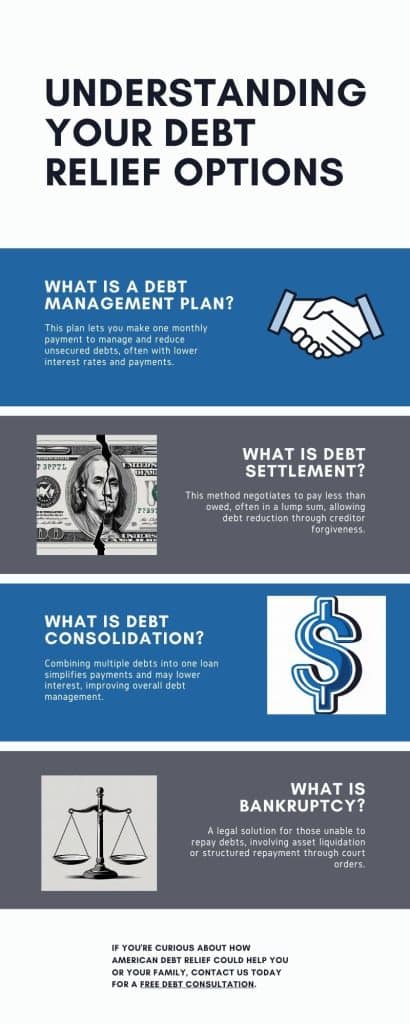
Through these strategies, nonprofit companies work out with lenders to decrease rate of interest prices, often dropping them to solitary digits from the 20-plus percent common on charge card. Late costs and over-limit costs normally get forgoed for enrolled accounts. Consumers make solitary regular monthly payments to the counseling company, which disperses funds to creditors according to negotiated terms.
Plans typically span 3 to 5 years, with typical conclusion around 40 months according to industry data. Unlike financial obligation forgiveness, consumers settle their full principal, protecting credit better while still achieving significant financial savings with rate of interest reduction.
Qualification needs demonstrating ability to maintain settlements throughout the strategy term. Accounts have to usually be closed upon registration, avoiding surcharge while settling existing balances. This trade-off between credit rating gain access to and debt resolution stands for an essential consideration for customers considering choices.
Warning and Indication in the red Relief
The financial obligation relief industry sadly draws in predacious drivers together with reputable nonprofits. Identifying warning signs assists consumers avoid solutions that might aggravate their scenarios.
In advance charges prior to solutions render stand for a considerable red flag. Federal guidelines restrict financial obligation negotiation business from charging charges up until successfully bargaining negotiations and obtaining at the very least one payment toward the worked out quantity. Business requesting considerable settlements before demonstrating results likely breach these protections.
Assurances of specific financial savings percents or guarantees to remove financial obligation completely needs to cause apprehension. Legitimate counselors acknowledge that lender engagement varies and end results depend upon private scenarios. No agency can ensure creditor teamwork or particular negotiation quantities.
Suggestions to stop paying financial institutions while accumulating funds for settlement produces considerable risk. This technique, typical amongst for-profit settlement business, generates additional late fees, passion charges, and prospective claims while damaging credit score further. Not-for-profit firms generally discourage this method.
Pressure methods, limited-time offers, or unwillingness to provide written info concerning fees and solutions recommend problematic operators. Respectable nonprofits provide detailed descriptions, solution inquiries patiently, and enable consumers time to make informed decisions.
Tax Effects of Forgiven Debt
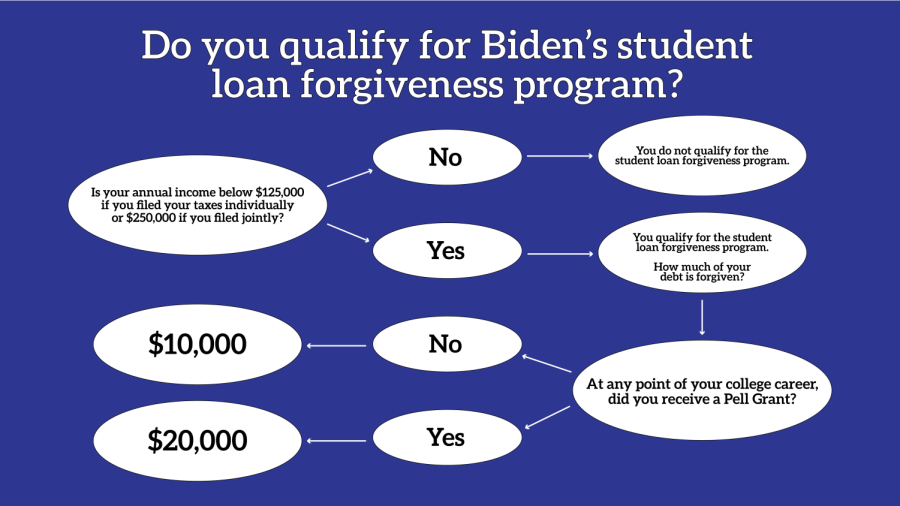
Consumers pursuing financial obligation mercy have to recognize potential tax consequences. Under government tax obligation legislation, forgiven debt amounts surpassing $600 commonly make up gross income. Financial institutions report these amounts to the internal revenue service using Kind 1099-C, and consumers should report them on yearly tax obligation returns.
For a person settling $30,000 in the red for $15,000, the forgiven $15,000 can increase taxed revenue substantially, possibly creating unanticipated tax responsibility. Consulting with tax obligation professionals before enlisting in mercy programs aids consumers get ready for these responsibilities.
Specific exceptions exist, consisting of bankruptcy arrangements for consumers whose liabilities went beyond assets at the time of forgiveness. Bankruptcy-discharged financial debt also receives different treatment. These complexities enhance the worth of expert support throughout the financial obligation resolution procedure.
Deciding: Which Course Forward
Choosing in between debt forgiveness, financial debt monitoring plans, and insolvency requires honest evaluation of individual conditions. Numerous concerns lead this evaluation.
Can you maintain structured repayments over three to 5 years? If indeed, financial debt management plans preserve credit scores while decreasing expenses. If repayment capability is severely restricted, forgiveness programs or bankruptcy might prove extra ideal.
Just how overdue are your accounts? Financial debt forgiveness generally requires significant misbehavior, making it improper for consumers present on settlements who just desire remedy for high rates of interest.
What are your long-term monetary goals? Insolvency continues to be on credit rating records for seven to 10 years, while settled accounts influence ratings for shorter durations. Customers planning significant acquisitions like homes within a number of years may like options with less lasting debt impacts.
Most not-for-profit agencies supply cost-free preliminary examinations, allowing exploration of alternatives without dedication. Taking advantage of these sessions with several carriers assists consumers recognize readily available courses and make notified options regarding which company and program best fits their demands.
The Course Towards Financial Healing
Frustrating debt creates tension expanding far past financial issues, impacting health, partnerships, and lifestyle. Recognizing available choices represents the vital initial step towards resolution and ultimate recovery.
Not-for-profit credit scores therapy agencies provide organized paths toward financial debt alleviation, whether via administration plans lowering rate of interest while maintaining full settlement, mercy programs resolving debts for less than owed, or personal bankruptcy therapy guiding consumers with lawful discharge procedures.
Success calls for sincere financial analysis, careful company evaluation, and dedication to whatever resolution strategy arises. The trip from monetary crisis to stability takes some time, but millions of customers have browsed it effectively with suitable professional support.
Financial counseling for veterans in Arizona coping with high summer costs and rising billsFor those currently struggling under financial debt problems, sources exist to assist. The difficulty lies not in finding support yet in locating the best help, properly matched to specific scenarios and objectives. That matching process, embarked on attentively with information collected from numerous sources, produces the foundation for lasting economic recovery.

Table of Contents
- – The Expanding Need for Financial Debt Alleviat...
- – Understanding Just How Financial Obligation Fo...
- – Bankruptcy Therapy: Called For Actions and Ava...
- – Comparing Not-for-profit Companies: What Ident...
- – Financial Debt Monitoring Plans: The Middle Gr...
- – Warning and Indication in the red Relief
- – Tax Effects of Forgiven Debt
- – Deciding: Which Course Forward
- – The Course Towards Financial Healing
Latest Posts
Post-Bankruptcy Help Including Follow-Up Services Fundamentals Explained

The Buzz on Recent Legislation That Could Change Debt Relief Procedures
Preventing the Previous Patterns After Your Fresh Start Fundamentals Explained
More
Latest Posts
Post-Bankruptcy Help Including Follow-Up Services Fundamentals Explained
The Buzz on Recent Legislation That Could Change Debt Relief Procedures
Preventing the Previous Patterns After Your Fresh Start Fundamentals Explained